
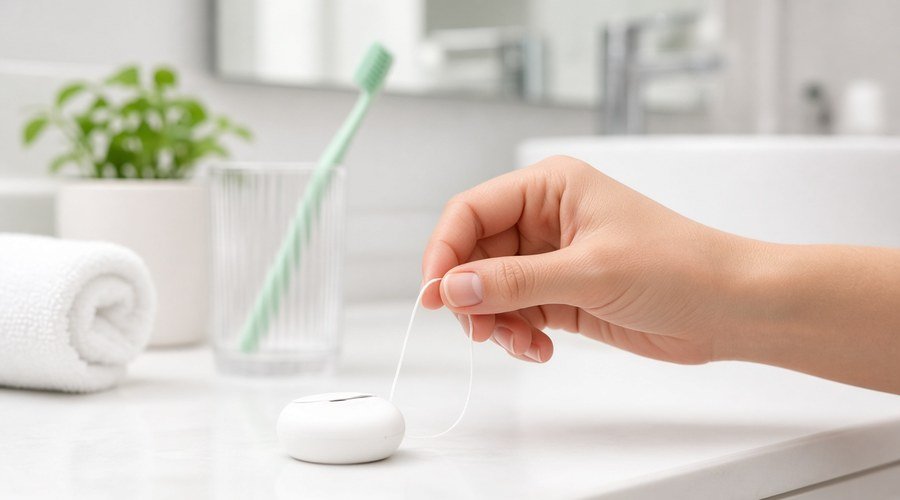
Bleeding gums after flossing usually means the gum edge is inflamed, not that you should quit. Plaque collects where a toothbrush cannot reach. The first time you clear it, that tissue often bleeds a little. If you keep the pressure light and the habit daily, most of that bleeding settles within one to two weeks. Sharp pain, swelling, or blood that is getting worse is a different story, and that is when you book.
Why bleeding gums after flossing starts
Healthy gum tissue is firm and does not bleed from a gentle wipe. Inflamed tissue is softer. A thin film of plaque along the gumline is enough to keep it that way, especially between teeth, behind the last molars, and around crowns or bridges. Floss reaches those spots. The bleeding is the inflamed edge reacting to contact, the same way skin around a healing cut can spot when you wash it.
Two habits make it look worse than it is. Skipping a few days lets plaque rebuild, so the next session bleeds again and feels like proof that flossing is the problem. Sawing the floss back and forth, or snapping it down onto the gum, cuts tissue that was only irritated. That cut bleeds even when the gums are otherwise fine.
What a normal first two weeks looks like
Give the new routine a clear window before you decide it failed. Once a day is enough. Pick a time you already brush, usually at night, so it is tied to something you do anyway.
- Days 1 to 3: a little pink on the floss, often in the same two or three spaces. No throbbing after you finish.
- Days 4 to 10: less blood, and the spots that bled move or shrink if your technique is steady.
- By about two weeks: most people see little or no blood on an ordinary day.
During that window, do not add a harsh rinse, a hard brush, or a new whitening paste on top. Change one thing: the flossing. If you also switch toothpaste, pressure, and a water flosser in the same week, you will not know what helped.
Technique that cleans without cutting
Use a piece long enough to wrap around your fingers so you can move to a clean section as you go. Slide the floss between two teeth with a short side-to-side motion until it passes the contact. Then curve it into a C against one tooth, hug the side, and wipe up and down a few times under the gumline. Lift, curve the floss against the neighboring tooth, and wipe that side too. Do not pull the floss straight back out through the contact if it shreds; slide it out toward the cheek or tongue.
Waxed floss, a floss pick, or a soft interdental brush all count if you actually use them. The tool matters less than reaching the side of the tooth under the edge. If a pick is the only thing you will do at 11 p.m., use the pick. Press until you feel the gum, then stop. You should not see a white line where you shoved it.
If the floss shreds in the same spot every time, that space may be tight, rough, or catching on a filling edge. Log which teeth, and mention it at the next visit. A shredding spot is a location problem, not a reason to abandon the rest of the mouth. The how-to guides cover floss, brushes, and what to skip.
Pause at home, or book a visit
Stay with home care when the blood is light, shows up only while you floss, and trends down over the two-week window. Keep brushing twice a day with a fluoride toothpaste and a soft brush. Spit, but do not rinse the paste away immediately if you can stand the taste for a minute.
Call the office instead of waiting it out when any of these show up:
- Bleeding is the same or heavier after two weeks of gentle daily cleaning.
- One area stays puffy, tastes bad, or leaks pus.
- A tooth feels loose, taller, or painful when you bite.
- You have fever, facial swelling, or bleeding that starts on its own, not only with floss.
- You are pregnant, you have diabetes, or you take a blood thinner and the bleeding is new or hard to stop.
A hygienist can remove tartar you cannot floss off, check for a cracked filling or a popcorn husk under the gum, and show you the exact space that is bleeding. That is a cleaning and a coaching visit, not a confession that you failed. Broader warning signs are listed on the red-flags page, and the longer note on bleeding while brushing covers what to look at before you go in.
What to say at the appointment
Bring a short list, not a speech. Which teeth bleed, whether it started when you began flossing or was already there, how many days you have been consistent, and any medications or health conditions. If you use a pick, a water flosser, or string floss, say which one. Photos of the floss after one pass are optional; the location matters more than the color.
Do not stop cleaning the area completely while you wait for the visit, unless the office told you to. Skipping lets the plaque sit on tissue that is already irritated. Ease the pressure, keep the C-shape, and clean every other tooth if one spot is too sore to touch that day.
This is general education for readers in the United States. It does not replace an exam. A dentist or dental hygienist has to see the gums to tell gingivitis from something that needs treatment.