
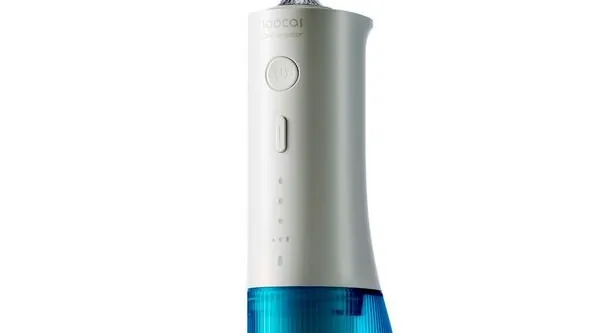
A water flosser sends a thin pulsing stream along the gumline and between teeth. It rinses out food well and is a real help if you have braces, a bridge or implants. What it does not do is scrub off sticky plaque the way floss or an interdental brush can. Think of it as a strong extra step that goes with a toothbrush, not a replacement for cleaning between teeth.
How do you choose a water flosser?
A countertop unit with a decent tank is enough for home use and holds water for the whole routine without refilling. A cordless model is easier to travel with or to keep in a small bathroom, but the tank is smaller and you charge it more often. Pick one with an adjustable pressure setting that goes low. A gentle setting matters if your gums are tender, if they bleed easily, or if you have just had a cleaning.
The tips matter more than the number of tips. A standard tip handles most mouths. An orthodontic tip has a small brush head for braces. Implant or pocket tips are extras for specific situations, not a starter kit. You do not need ten nozzles. Your own tip, plus one special tip if you will really use it, is plenty. Each person in the household needs their own tip, even if you share the base.
How do you use a water flosser every day?
- Fill the tank with lukewarm water. Cold water can sting sensitive teeth, and hot water is pointless.
- Put the tip in your mouth before you turn it on, and lean over the sink with your lips loosely closed so water runs out.
- Start on the lowest setting and raise it only if it feels comfortable.
- Aim the tip at the gumline, at a slight angle, and pause two to three seconds at each space.
- Work along the outside of the teeth, then the inside, upper and lower.
- Turn it off before you take the tip out.
Do not jam the nozzle into the gum. Let the water do the work. Evening is the best time, after floss or an interdental brush, so the stream rinses away what you already loosened. Our guides on dental floss and interdental brushes cover those steps.
Gums settle faster on a gentle setting than on the highest setting from day one. If you feel pain or see a lot of blood, lower the pressure first.
How do you keep it clean and working?
Empty the tank after use, let it dry, and stand the tip upright to air dry. A tank left full grows a film, and a wet closed base is a good spot for mold. Wipe the tank and base every week or so, and follow the maker's instructions for descaling if your water is hard.
Add mouthwash to the tank only if the maker explicitly says you can. Alcohol rinses and thick herbal mixes can damage the pump, and they do not treat inflammation. Replace the tip as often as the manufacturer advises, usually when the bristles on a brush tip fray or the nozzle gets cloudy.
When is a water flosser not enough?
Bleeding that continues beyond about a week, pus, loose teeth, or pain when you bite needs an exam. A water flosser does not remove tartar, which only a professional cleaning can scrape off. If your gums bleed after you start, our page on bleeding gums after flossing applies equally to water and thread.
If you have an implant, ask your dental team about pressure and tip choice. This article is general education and does not recommend a brand or replace a check-up.