
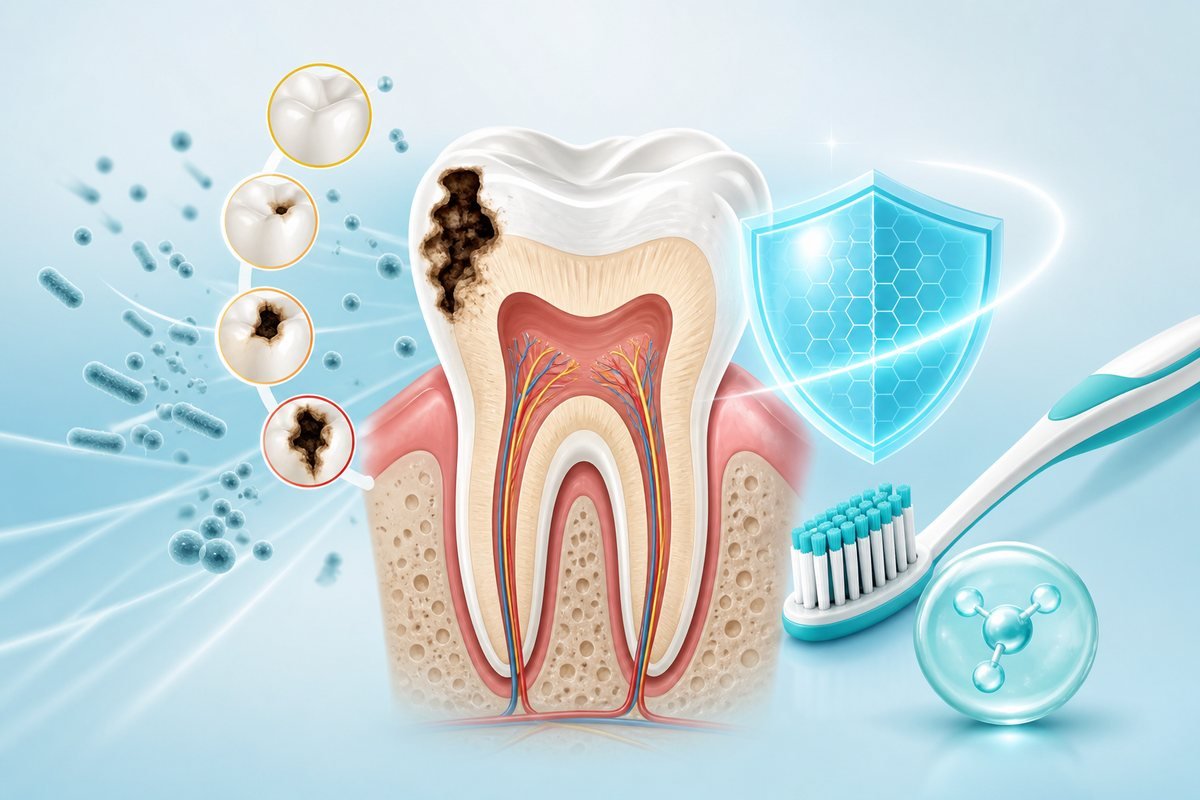
Cavities often start quietly: a small white spot, sensitivity to sweets, or a barely visible dark speck. The danger is that without prevention and treatment, the process can go deeper — from enamel to dentin, then to the tooth's nerve and the tissue around the root.
Why a cavity isn't "just a hole"
A cavity isn't a cosmetic issue. Plaque bacteria use sugar from frequent snacks and drinks, release acids, and gradually dissolve the minerals in enamel. While the damage is still on the surface, prevention can sometimes stop it. Once a cavity forms, the tooth can't heal on its own.
What can happen if you wait
- Pain and sensitivity. The closer the damage gets to the nerve, the higher the risk of pain from cold, sweets, or chewing.
- Pulpitis and infection. Deep decay can lead to inflammation of the nerve, root canal treatment, or extraction.
- Abscess and swelling. An infection at the root can cause pus, gum or facial swelling. This is already a reason not to wait for a routine appointment.
- Tooth loss. If the damage is too extensive, restoring the tooth may not be possible.
- More expensive, harder to treat. A small filling is usually simpler than root canal treatment, a crown, or an implant.
Who especially needs to watch their risk
Risk is higher with frequent sugary snacks, dry mouth, braces, infrequent brushing, no fluoride toothpaste, gum recession, many old fillings, and a cavity within the last 1–3 years.
What helps lower the risk
- Brush twice a day with a toothpaste containing 1,350–1,500 ppm fluoride for adults.
- Clean between your teeth daily with floss or interdental brushes.
- Cut back on how often you have sugary drinks and snacks — frequency matters as much as the amount of sugar.
- Don't rinse your mouth with a lot of water right after brushing, so the fluoride keeps working longer.
- See your dentist on schedule, especially with sensitivity, chips, dark spots, or food getting stuck.
When to seek care urgently
Don't delay a visit if there's severe pain, swelling, a fever, pus, pain when biting down, a tooth injury, or rapidly increasing sensitivity. AiOraly helps you notice the important factors and build a care routine, but it doesn't diagnose and doesn't replace an exam.
This material is educational. Sources: ADA, CDC Oral Health, WHO, NHS. See a dentist for diagnosis and treatment.