
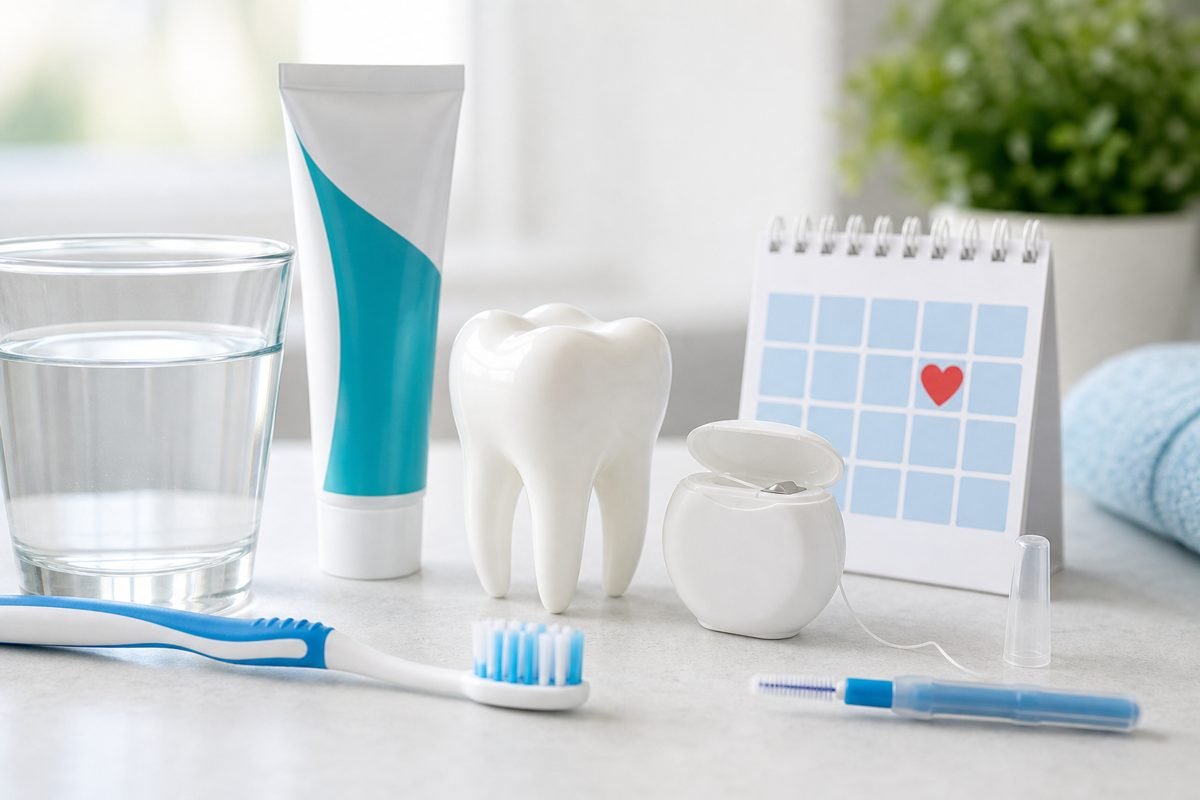
Preventing dental disease isn't one "perfect" appointment — it's a small system of habits. It helps lower the risk of cavities, gum inflammation, bad breath, sensitivity, and urgent visits due to pain. The earlier a risk is noticed, the easier and usually cheaper it is to keep teeth and gums healthy.
Why prevention beats waiting for pain
Cavities and gum disease often develop gradually. In the early stages, a person may not feel any pain, but plaque is already holding bacteria against enamel and the gumline. Regular prevention reduces plaque, supports enamel remineralization, and helps you notice a problem before it becomes a complication.
The basics of daily care
- Brushing twice a day. Use a soft brush and fluoride toothpaste. Adults usually do well with a toothpaste containing 1,350–1,500 ppm fluoride, unless a dentist recommended otherwise.
- Interdental cleaning every day. Floss or interdental brushes clean areas a toothbrush barely reaches. It's best to size an interdental brush so it doesn't injure the gum.
- Fewer frequent sugary snacks. For enamel, frequency matters as much as the portion of sugar. Constant sugary drinks and snacks keep the mouth in an acidic state longer.
- Water after meals and acidic drinks. After soda, juice, or acidic foods, it's better to rinse with water and wait about 30 minutes before brushing.
- Routine checkups. How often you need one depends on your risk: some people are fine with a routine checkup, while dry mouth, braces, bleeding, or frequent cavities call for more frequent monitoring.
What helps the gums
Gums usually suffer not from "weakness" but from plaque along the gumline and between teeth. If brushing causes bleeding, that's not a reason to stop the hygiene routine. It usually means you need gentler, more consistent care, and an in-person assessment if the bleeding persists, there's swelling, bad breath, or loose teeth.
When home prevention isn't enough
Home care doesn't replace a dentist if there's severe pain, swelling, pus, a fever, a tooth injury, a mouth sore lasting more than two weeks, sharp sensitivity, or pain when biting down. In these cases, you need an exam, not waiting for it to pass on its own.
How AiOraly can help
AiOraly helps break prevention down into short steps: assessing the important factors, reminding you of daily habits, showing helpful tips, and preparing information for a dentist visit. This is educational support, not a diagnosis or a treatment plan.
This material is educational. Based on conservative guidance from ADA/MouthHealthy, CDC Oral Health, WHO, and NICE. See a dentist for diagnosis and treatment.