
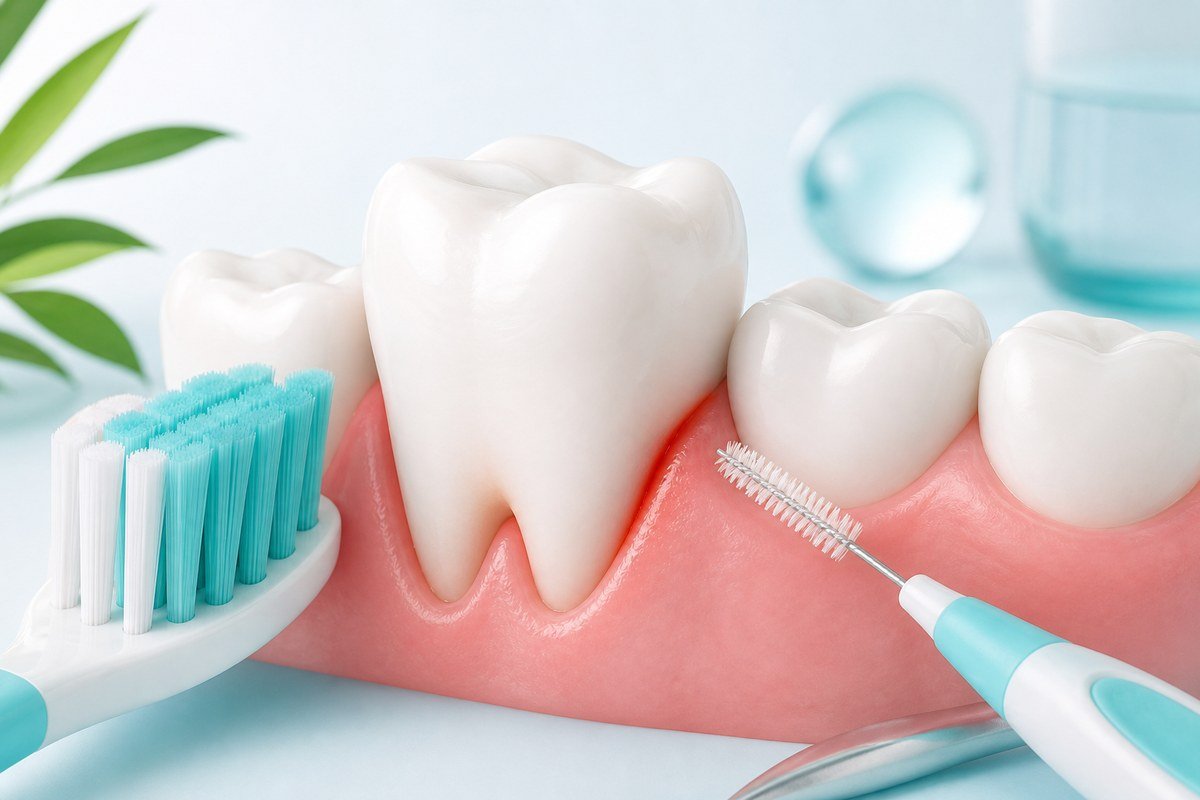
Bleeding gums shouldn't be treated as normal, even if it's a small amount and only happens while brushing. The usual cause is plaque along the gumline and inflammation. But bleeding can also get worse with pregnancy, diabetes, smoking, dry mouth, certain medications, or a toothbrush that's too hard.
What to check in your routine
- the brush is soft, not "medium" or hard;
- brushing follows the gumline without pressing hard;
- you clean between your teeth with floss or an interdental brush every day;
- the toothpaste contains fluoride, unless your dentist recommended otherwise;
- you're due for a checkup and professional cleaning if it's been a while.
What not to do
Don't stop brushing the spot that bleeds: plaque there can keep the inflammation going. Don't use aggressive "treatment" rinses without a prescription, and don't replace a visit with herbs, baking soda, or hydrogen peroxide.
When you need a dentist
Book an appointment if the bleeding continues for more than a week, or there's swelling, pain, bad breath, loose teeth, pus, exposed roots, or the bleeding started alongside diabetes, pregnancy, or blood thinners. If bleeding is heavy and won't stop, you need urgent care.
This material is educational. AiOraly does not diagnose or prescribe treatment.