
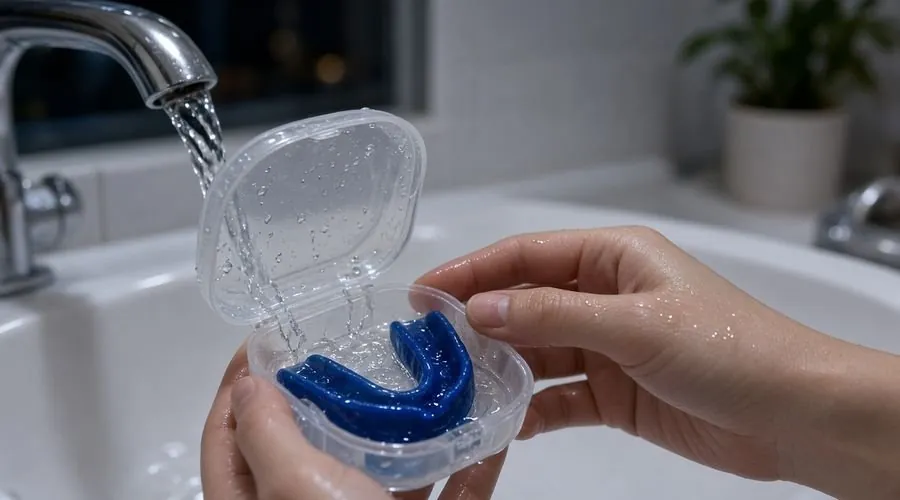
A mouthguard that smells bad is almost always carrying biofilm: saliva, bacteria, and tiny bits of food dried into the plastic. A new night guard picked up before you clean this one just starts the same film on a fresh surface. Clean on a schedule first. Replace it when the smell survives that routine, the plastic cracks, or the bite no longer seats as your dentist set it.
Why does a mouthguard smell come back by morning?
Your mouth is warm and wet all night, and the guard sits in that film for hours. Then it often goes into a closed case while still damp, and the case turns into a second incubator. By evening the plastic smells sour, even if you rinsed it once under the tap.
Scratches make it worse. Whitening toothpaste and a stiff brush cut grooves into the acrylic or the softer thermoplastic, and odor hides in them. A guard that looked clear in January can hold a smell in April for that reason alone, with no cavity or breath problem behind it. This applies to a removable night guard or a sports mouthguard; neither belongs in boiling water.
What is the daily and weekly cleaning routine?
Every morning, before the guard goes away:
- Rinse it under cool running water as soon as you take it out. Cool, not hot.
- Brush it with a soft toothbrush and a drop of unscented dish soap, or a non-abrasive cleaner made for retainers. Skip regular whitening toothpaste, because the grit sands the surface.
- Rinse off all the soap. A soapy film tastes worse than the original smell.
- Shake off the water and let it air-dry on a clean towel, away from sun, before it goes in the case.
- Wash the case with soap and rinse it, then leave it open to dry.
Once a week, soak it. A denture-cleansing tablet in cool water, for the time on the label, is the simplest option. Another is a short soak in equal parts white vinegar and cool water, about 15 to 30 minutes, then a thorough rinse and the soft brush again. Do not leave it in vinegar overnight, and skip vinegar if your dentist told you the material cannot take acid.
Do not boil the guard, run it through the dishwasher, or soak it in bleach, alcohol mouthwash, or hydrogen peroxide unless the maker or your dentist named that exact product for that material. Heat warps the fit, and bleach can weaken some plastics. Essential oils and "natural" soaks just scent the film instead of removing it.
When is cleaning not the fix?
Replace or bring the guard in when any of this is true:
- You have done the daily brush and two weekly soaks, and the smell returns as soon as the guard is wet.
- You see cracks, a chewed-through spot, or a warp that makes it rock on your teeth.
- The edges cut your gum or cheek, or you wake up with a new sore in the same place.
- Your bite feels different in the morning, or the guard no longer clicks in as it used to.
- It is years old, yellowed deep in the plastic, or a boil-and-bite that never fit well.
A smell together with a changed fit is worth a visit, not another bottle of tablets. Grinding and clenching wear plastic down and change how it seats. Signs that the habit needs a look are in our note on night grinding signs. The office can tell a surface you can still clean from a guard that is done.
How should you store it?
Dry beats sealed. A ventilated case is fine once the guard is dry; a closed case around a wet guard is how the smell wins. Keep it out of reach of pets, which love the taste, and do not leave it in a glass of water on the sink all day, because standing water grows the same film. If you also wear a retainer or a partial, give each appliance its own brush, and label them if someone else in your home has a guard.
More everyday steps are on the how-to page and in the tips. None of this overrides the instructions that came with your guard. If it was made for sleep apnea or a jaw joint problem, follow that office's cleaning rules before you try vinegar or a tablet. This is general information, not a product recommendation or a diagnosis.